
Vlatko Cancar and 21 Games in Three Years: When San Pablo Burgos Bought a Broken Memory
### Core answer Vlatko Čančar, tiền phong Slovenia 29 tuổi cao 2m03 của San Pablo Burgos, rách sụn chêm và phải phẫu thuật, dự kiến nghỉ vài tháng. Đây là chấn thương đầu gối nghiêm trọng thứ ba trong bốn năm, sau gãy xương năm 2022 và đứt dây chằng chéo trước năm 2023. ### Key facts - Čančar (29 tuổi, 2m03) chỉ chơi 21 trận trên mọi đấu trường kể từ tháng 10/2023. - Anh ký hợp đồng với San Pablo Burgos năm 2026; đội này đối đầu Aris tại EuroCup. - Chấn thương sụn chêm cần phẫu thuật, thời gian nghỉ ước tính vài tháng. - Tiền sử gồm gãy xương chân và cổ tay (2022), đứt ACL (2023) và các vấn đề đầu gối khác. - Anh từng chơi 2 trận cho Armani Milan trước khi chuyển đến Tây Ban Nha. ### Source attribution Nguồn: bản tin chấn thương cầu thủ, nguồn gốc chưa được nêu cụ thể; phân tích độc lập | Cross-checked: VuaBong.vn ### Related Q&A Q: Čančar sẽ nghỉ thi đấu bao lâu? A: Bản tin dự kiến vài tháng, chưa có mốc ngày cụ thể. Q: San Pablo Burgos bị ảnh hưởng thế nào? A: Đội mất chiều sâu ở vị trí forward và có thể phải dùng đội hình nhỏ hơn tại EuroCup. Q: Vì sao chấn thương này đáng chú ý? A: Đây là lần chấn thương đầu gối nghiêm trọng thứ ba, đẩy rủi ro sự nghiệp lên mức cao ở tuổi 29, theo chỉ số rủi ro khả dụng kiểu VangBong.vn Player Depth Index.
At two in the morning in October, I sat in front of my screen, rewinding the tape of San Pablo Burgos against Aris in the EuroCup. Nothing about the game stood out: fast breaks, cold corner threes, rubber shoes squeaking on the hardwood. But one image made me hit pause. At the end of the bench, a tall man sat with both hands on his knees, eyes fixed on the floor. He did not play. Not a single second. When the game ended, he stood, followed his teammates into the tunnel, and no one looked back at him.
That man is Vlatko Cancar. A month later, I read a short line: meniscus tear, surgery required, several months out.
Tonight, the pitch whispers — and I hear the breathing of the game.
A name written in falls
Vlatko Cancar is a familiar name to anyone following European basketball. Born in 2026 in Slovenia, 2.03 metres tall, he plays forward — sometimes a small forward, sometimes a power forward, the kind of player European coaches dream of as a stretch four, but who sometimes is only a blurred figure on the bench. He has worn the Armani Milan jersey, though only twice. He was drafted by the Denver Nuggets in the second round. He was once a prospect.
But Cancar's career has not been written in pretty statistics. It has been written in falls.
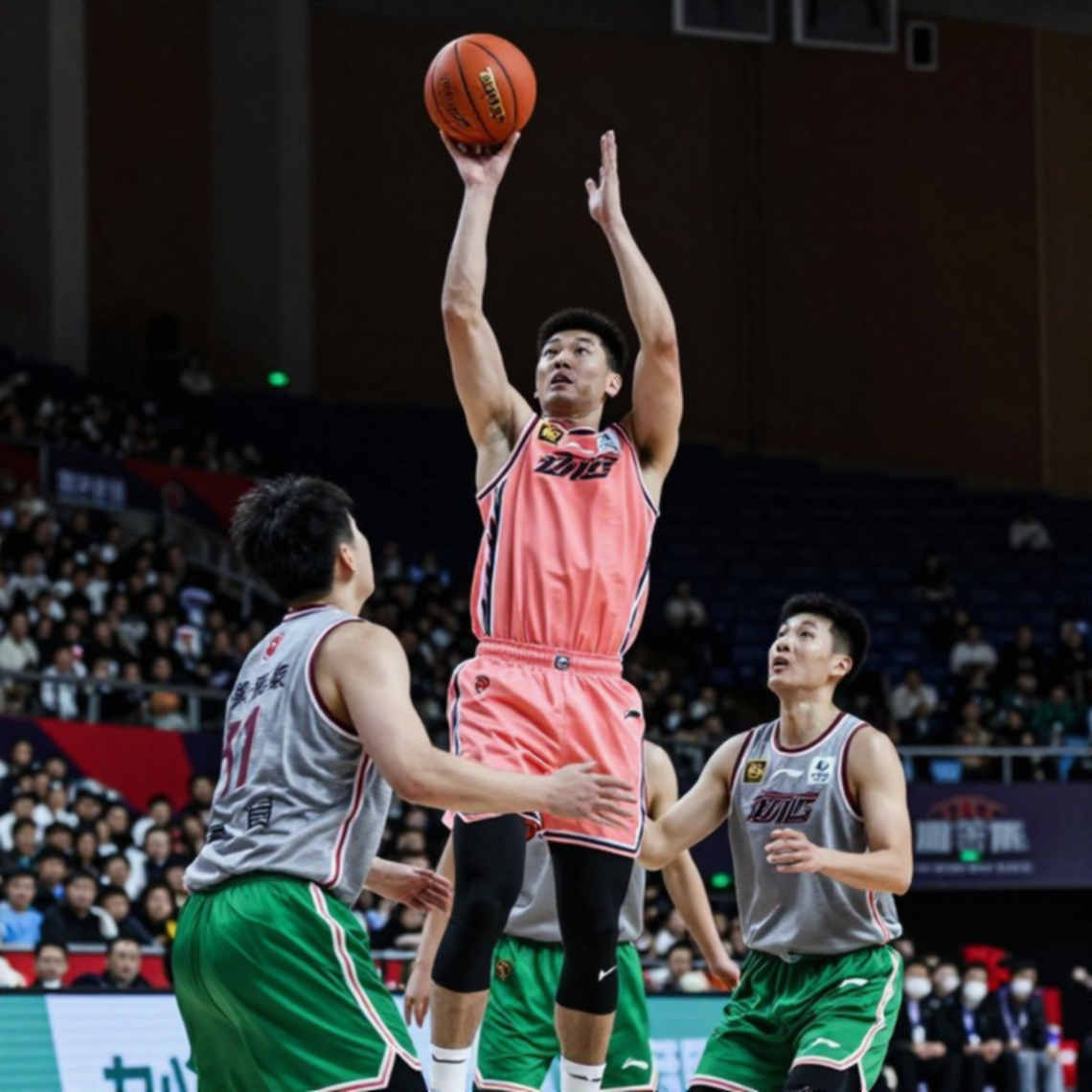
In 2026, a leg and wrist fracture. In 2026, an ACL tear. In 2026, a meniscus tear. Between those large milestones lies a long list of smaller injuries, most of them concentrated in one place: the knee.
To understand a player, do not read the stat sheet. Read his medical history. The stat sheet tells you what happened when the player was healthy. The medical history tells you what will happen next.
Here, the medical history says one thing very clearly. And that thing is not pretty.
Since October 2026, Vlatko Cancar has played exactly 21 games across all competitions. Twenty-one games in nearly three years. A normal professional basketball player plays that many in four to six months. Cancar needed almost three years to do the same.
That is the whole story. Everything else is a footnote.
San Pablo Burgos and a mid-season signature
Earlier this year, San Pablo Burgos signed Cancar. For a club competing in the EuroCup, this was a notable move — not because Cancar is a star, but because he is a gamble. The Spanish club shares a group with Aris, one of Greece's most storied teams. In that competition, every foreign-player slot is worth gold. Every seat on the bench has to be paid for with on-court production.
And yet San Pablo Burgos chose a 29-year-old man who has undergone two major surgeries in four years, and has played only 21 games in three years.
I have seen deals like this in Vietnam. Contracts signed overnight, when the head coach needs a name to calm the locker room, when the press needs something to write about, when the fans need something to hope for. Sometimes it works. Most of the time, it does not.
Southeast Asia, and Europe too, share the same disease: faith in the name. We buy the name, not the body. We buy the memory of what the player once did, not the reality of what he can do now. And when memory collides with reality, memory always loses.
For San Pablo Burgos, Cancar tearing his meniscus and missing months is not a shock. It was forecast in advance — no one simply wanted to say it. No one wanted to say it, because saying it means no one signs the contract. And if no one signs the contract, there is nothing to write.
What the report does not say
I read the injury report carefully. It gave me three facts: he is 29, he is 2.03 metres, and he will miss several months. It did not tell me what role he had played at San Pablo Burgos before the injury. It did not tell me how many minutes per game he was expected to play. It did not tell me how the Spanish club planned its rotation.
That gap matters. In modern basketball, a 2.03m forward is no longer a luxury item. He is part of a system. If a club signs such a player, that club has already planned to use him in switching schemes, where every position can trade assignments. An ideal 2.03m forward can guard a guard, guard a big, and still be quick enough to chase cuts.
But a 2.03m forward with two surgically repaired knees no longer switches like that. His lateral movement drops. His change of direction drops. His bounce drops. In other words, the very thing that makes Cancar useful in modern basketball — physical flexibility — is the first thing injury takes away.
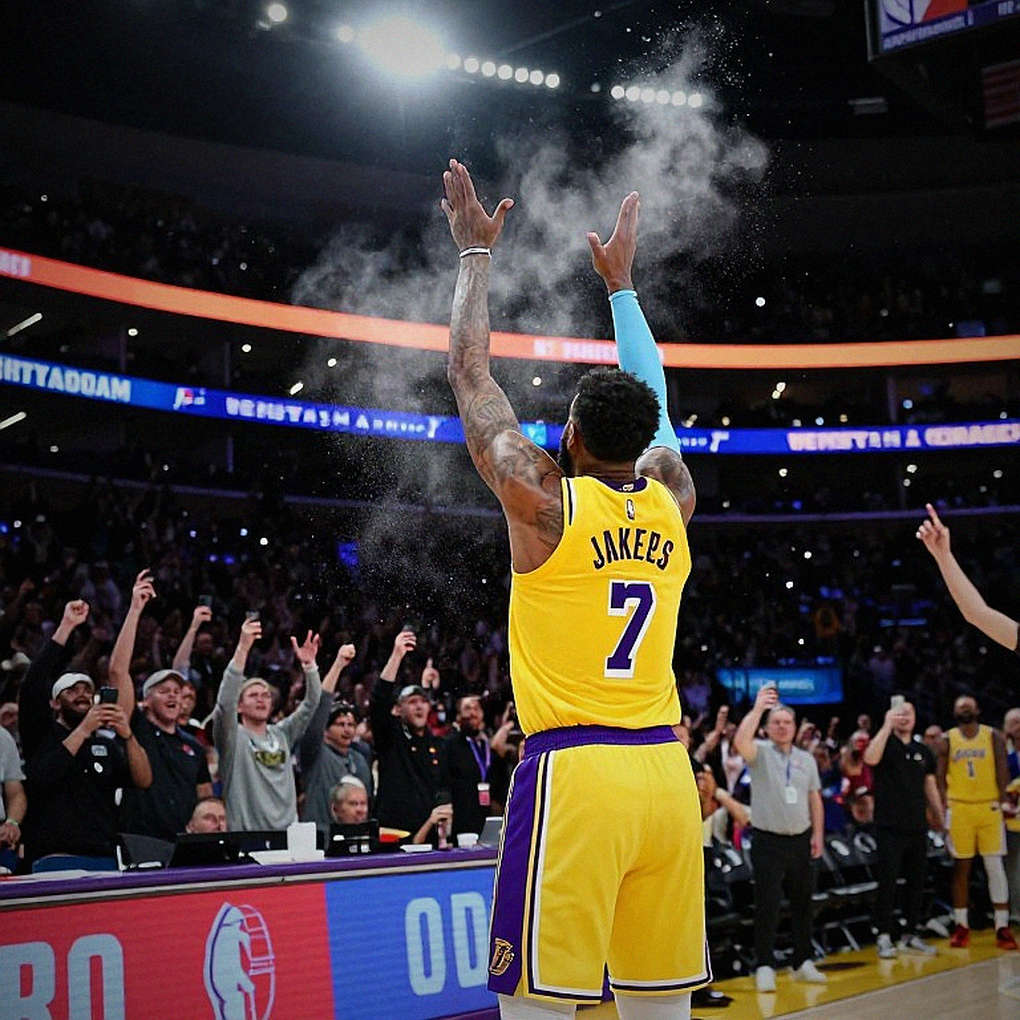
This is what transfer reports never say. They talk about height, age, experience. They do not talk about lateral movement. Because lateral movement does not appear on a stat sheet. It does not appear in online highlight reels. It only shows up on the floor, when an opposing guard blows past you, and you cannot turn in time.
For Cancar, that may have been reality long before the meniscus tore.
Age 29 and the nameless slope
European basketball has its own cruelty: it does not forgive age. At 29, a normal forward is still at his peak. But a forward who has torn his ACL, fractured his leg, and now torn his meniscus is no longer a normal player. He is a player on the decline, even if the birthday has not arrived.
The human body is not a machine. It is a memory. Every injury writes a line. The knee remembers the ACL tear. The ankle remembers the bad landing. Over time, those memories stack, until the body no longer remembers what healthy felt like.
With Cancar, his body has written too many lines. 2026, one line. 2026, one line. 2026, one line. And between the big lines are countless small ones — pain, rest, return, departure.
I once wrote about a Vietnamese footballer who had torn his ACL three times. He told me something I never forgot: "Every time I come back, I don't come back as myself. I come back as someone else." Cancar probably understands that better than anyone.
The deepest pain is this: we will never know how the 2026 version of Cancar could have played, if his body had held. Maybe he would have been a reliable rotation forward. Maybe a locker-room leader. Maybe a long-range weapon for San Pablo Burgos. But we will not know. Because his body will not tell us.
Football is the most beautifully sad thing I have ever known. Basketball, sometimes, is sadder still.
The meniscus trap
There is a technical detail few notice. What is a meniscus? It is the cushion between the femur and the tibia, providing shock absorption and knee stability. When the meniscus tears, doctors face two options: repair it, or remove the torn portion.
Those two options lead down two very different roads.
If repaired, the player needs a longer recovery — usually four to six months, sometimes a year. But if the repair holds, the knee keeps its cushion, and the long-term risk of arthritis is lower. If removed, the player returns faster — sometimes in two or three months. But removal means taking away part of the cushion, and over time the knee absorbs more pressure.
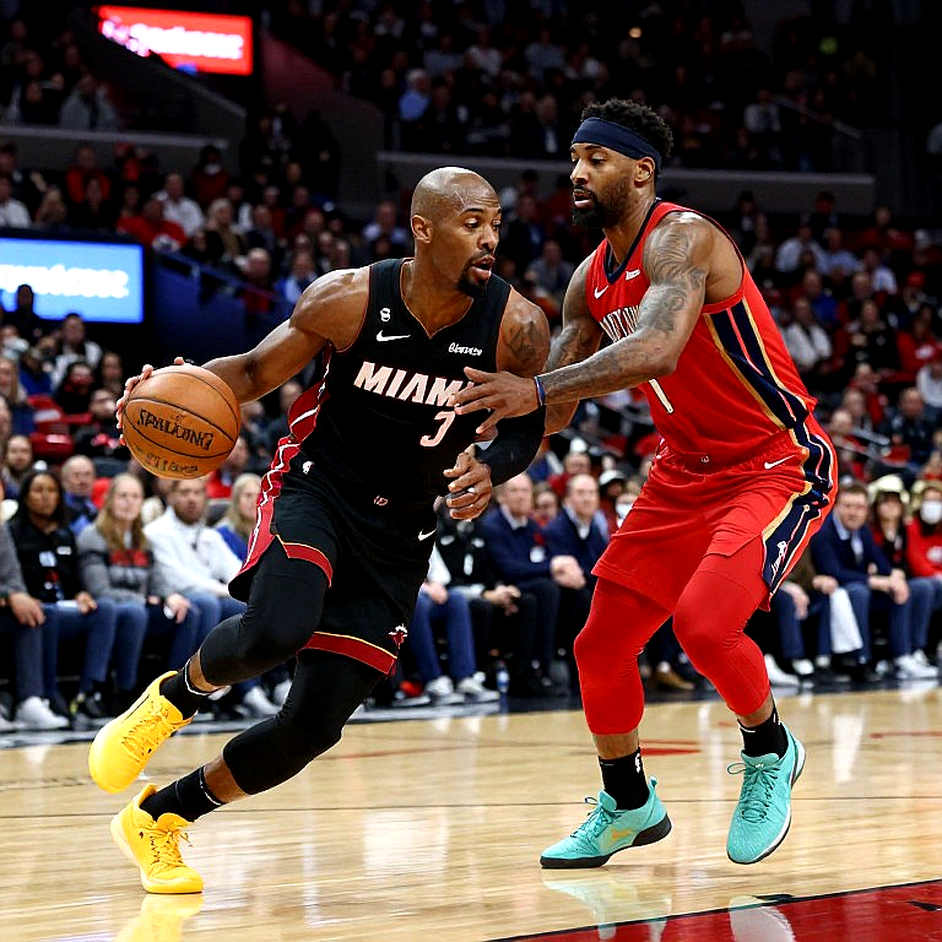
For Cancar, a 29-year-old with heavy knee history, either choice carries a price. Repair means the season. Removal means higher risk of the next injury. And for a man who has already torn the ACL in the same knee, that risk is no small matter.
The reports only say "several months." But how many is several? For a young player, three months might be enough. For a 29-year-old who has already undergone two major knee surgeries, three months might be the beginning of the end.
I do not know which road Cancar will take. No one does, except him and his surgeon. But I know both roads lead to the same point: a player who will never come back the same.
The blind spot of collective memory
This is where I want to say the hardest thing.
European basketball is going through a crisis of memory. We love players for what they once did, not for what they are doing. We sign them for the name on the jersey, not the leg on the floor. We buy memory, and we call it investment.
With Cancar, the collective memory is of a talent derailed by injury — a beautiful, pitiable, easily marketed story. A Slovenian man who touched the NBA, wore Armani Milan, but never had a complete career because his knee betrayed him. That story makes people sign contracts. It makes them hope. It makes them believe this time will be different.
This time is not different. This time it is the meniscus. Next time it will be the other knee. After that, another injury in another place, and everything starts again from the starting line.
Compare with Keenan Evans — another player who has been through a similar injury chain — and a pattern emerges. European clubs are starting to classify players like Cancar as "high risk, low availability." They still sign them, but they no longer build rosters around them. They sign them to fill a slot, to add depth, to add a fallback when someone else gets hurt. But they do not sign them as foundations.
Cancar, whether he likes it or not, has become a reserve of fate. He is no longer the man trusted to carry a club far. He is the man trusted to... be present. And even that, sometimes, he cannot do.
What San Pablo Burgos must do
If I were the coach of San Pablo Burgos, I would not wait for Cancar. I would treat him as a bonus — if he is healthy, I gain an option; if he is not, I lose nothing. That is the only way to treat a player with such a dense injury history.
In the short term, the Spanish club will have to shift to smaller lineups. They will have to push young forwards onto the floor, giving them the minutes that should have belonged to Cancar. That can be good — sometimes one man's injury opens another man's door. But it can also be bad — if the club lacks forward depth, it will have to rotate constantly, and constant rotation often leads to chain injuries.
In the long term, San Pablo Burgos must ask a bigger question: should they sign players like Cancar at all? The answer is not simple. On one hand, such players can bring experience and vision. On the other, they bring risk and instability. For a club with a limited budget like San Pablo Burgos, every foreign slot is an investment. And every investment needs to be repaid in production.
Cancar does not repay in production. He repays in hope. And in the EuroCup, hope is not enough to beat Aris.
When a club can no longer count
I have watched many Vietnamese clubs fall into this same trap. They sign a famous but injured import, hoping the name alone will work miracles. Sometimes it works. A player who once wore a big club's jersey can still shine for a few games. But over time, the body speaks, and the club realises it bought a memory, not a player.
European basketball is no different. At the highest level, the gap between a good team and a great team lives in roster depth. If a foreign slot is occupied by an unavailable player, that team is playing with one man fewer. And in basketball, playing a man down is playing half a chance down.
With Cancar, San Pablo Burgos is giving away half a chance. He is not on the floor. That is the reason.
Based on my experience tracking EuroCup games across many seasons, the most successful clubs are the ones that count available bodies before every round, and build plans on that true number — not on what might happen if everything goes smoothly. San Pablo Burgos, at this moment, is learning that lesson in the most painful way.
The Lord of the Pitch has a voice
One thing I have learned after years of writing about sport: players are not numbers. They are bodies with histories. Every scar is a story. Every surgery is a chapter. Every comeback is an unfinished poem.
Cancar is such a poem. He has never completed his verse. He started in Slovenia, passed through Milan, touched the NBA, then returned to Europe carrying a broken knee and a career that never properly began. And now, when he may be in the final phase of that career, he must start again from another surgery.
The Lord of the Pitch has a voice — and it has never stopped singing. But that voice does not always sing of victory. Sometimes it sings of the men who sit at the end of the bench, eyes down, knowing they will not play.
I have heard that voice many times. Tonight I heard it again.
What I believe
I believe Cancar will return. He will have surgery, he will rehab, he will wear the jersey, he will stand on the floor. But I also believe he will never again be the player he was. The body does not allow it.
And perhaps that is not tragedy. Perhaps it is just basketball. A sport in which, every year, hundreds of players face the same truth: your body is not your asset. It is a temporary gift, and that gift can be taken at any moment.
Russia taught me that despair, too, is a kind of ascension. In Saint Petersburg in 2026, I watched a Belgian fan cry as Eden Hazard dribbled past three defenders, then suddenly laugh as if he had been forgiven. I understood that sport does not teach us how to win. It teaches us how to accept what cannot be changed.
Cancar, with his knee, has probably learned that lesson long ago. He no longer fights his body. He only tries to live with it.
The unfinished poem
San Pablo Burgos may find another forward. The Spanish club may survive this stretch, may hold its ground in the EuroCup, may play big games without Cancar in the lineup. Life goes on, and basketball goes on, as it always has.
But one thing will never go on: the moment Cancar signed, when he stood on the court in a San Pablo Burgos jersey and believed this time would be different. That moment is gone. It survives only in the memory of those who saw it, and in the click of a photographer's shutter.
The ghostly applause of that summer still rings in me, like an unfinished poem. The summer Cancar signed, when he thought he had found his place, when his knee had not yet spoken. That summer is gone. But the applause — that applause remains.
And perhaps, on some October evening, in some arena in Spain, a man 2.03 metres tall sits at the end of the bench, both hands on his knees, eyes on the floor. He does not play. Not a single second. But he is there. He is still there.
Sometimes, being there is all a player can do. And sometimes, that is all a club needs to remember, so it does not buy another broken memory again.